

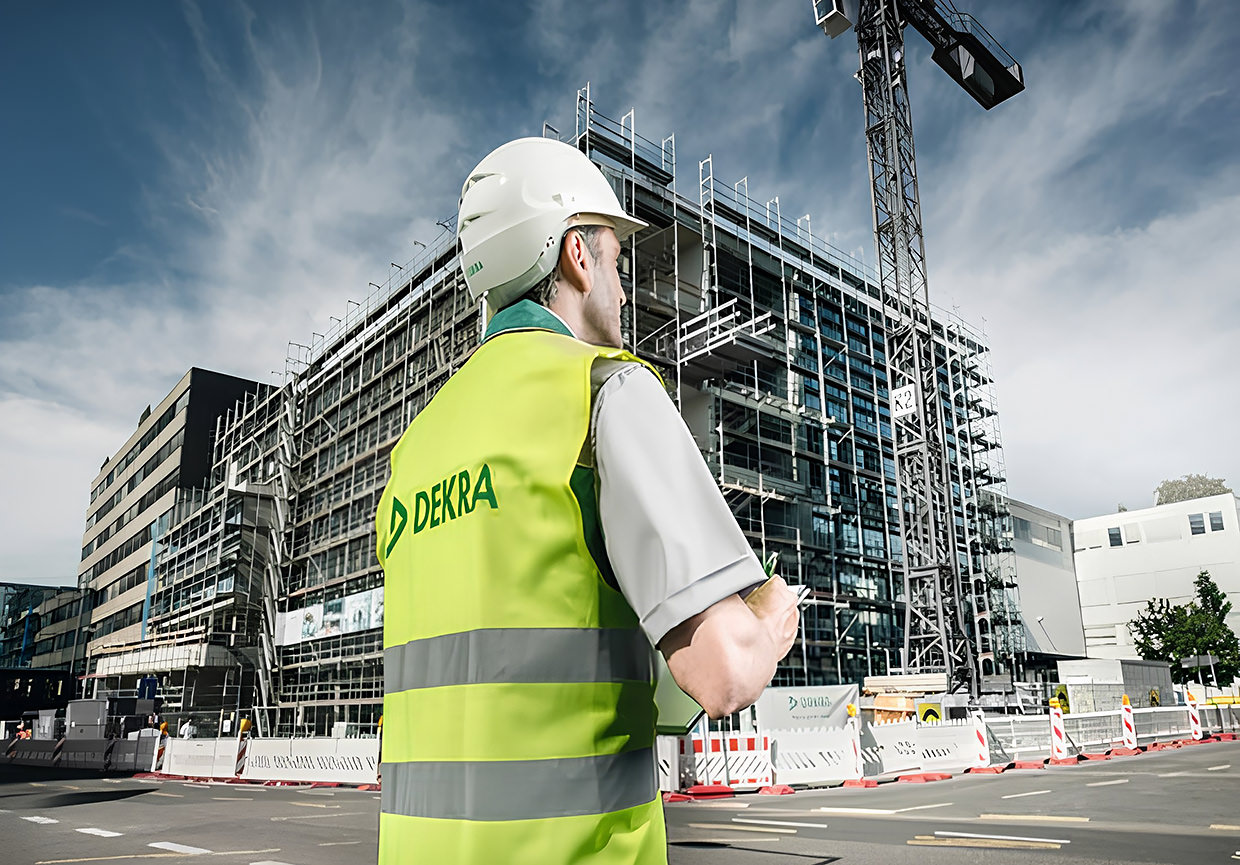
As Dekra celebrates its 100th anniversary globally, locally Dekra Industrial and its adult-based education and occupational skills training division, the DEKRA Institute of Learning (IOL) remain steadfast in their mission: to support safer workplaces across Africa through intelligent, industry-specific training and safety assessments.
Process Safety Management (PSM) is one of the most critical components of this mission: designed not only to safeguard workers and facilities but to create a proactive safety culture which protects lives, infrastructure and the environment.
Process safety versus occupational health and safety
Christopher Mörsner, Head of Training and Consulting at the DEKRA Institute of Learning, notes that there remains a common misconception among companies regarding the distinction between occupational health and safety (OHS) and process safety. “Occupational safety primarily addresses frequent, lower-risk incidents – whereas process safety management focuses on rare but potentially catastrophic events, including explosions or hazardous chemical releases,” Mörsner explains.
PSM involves systematic evaluation and control of hazards linked to chemical processes, dust generation, flammable atmospheres or hazardous by-products. “A single event in process safety can lead to multiple fatalities, widespread property damage and environmental impact,” he says. “It is not just about compliance. It is about foresight, accountability, and building resilience into every operational process.”
Creating awareness through real-world context
Process safety failures are not limited to large-scale chemical plants. Even everyday foodstuffs such as sugar, beer or cornflakes can pose serious risks if the by-products of their manufacturing processes – such as airborne dust or volatile compounds – are not stringently controlled. “Static electricity, poor grounding or non-compliant batching procedures can trigger devastating secondary explosions. These risks are often hidden in plain sight,” Mörsner observes.
He highlights that process safety management is essential across a wide range of industries including food and beverage, pharmaceuticals, distilleries, power generation, petrochemical, and oil and gas. In terms of this, Dekra’s PSM framework is tailored to each client’s specific risks and infrastructure, and there is no generic checklist.
“Each process must be broken down into what we call ‘process nodes,’ and every node must be evaluated and mitigated to an acceptable risk level,” he says.
Technology, human error and training
Mörsner cites human error, legacy systems and outdated equipment as the leading contributors to incidents. “Automation and training go hand-in-hand. We are not replacing people – we are supporting them to work more safely.”
Dekra Industrial’s and the IOL’s approach includes assessments that can develop into training opportunities, enabling clients to meet international and local statutory requirements such as SANS 1461, SANS 10108 and ISO 31000. “Dekra Global’s dynamic risk register is a proprietary tool that we use to model exact client environments and run simulations before any real-world implementation. It allows us to detect vulnerabilities and develop targeted mitigation strategies in advance,” he adds.
Bridging the gap in understanding
According to Mörsner, the most commonly misunderstood aspects of PSM are risk management and management of change. “Many clients overlook how a change in staff, layout or raw materials can introduce new risks to their process. If you do not factor in the human and procedural changes, you risk major liabilities.”
To bridge this gap, Dekra Industrial and the IOL always start with a baseline assessment. “Our goal is to identify potential failure points and educate clients on the true scope of their risk – not just from a compliance standpoint, but from a business continuity and reputational perspective too.”
Teamwork and culture: foundations for the future
Mörsner comments that successful PSM implementation throughout industry depends on collective responsibility. “It takes teamwork at every level. We work closely with operators, engineers and management to ensure alignment and understanding. Process safety management is not just a Dekra initiative: it is a collaborative process to achieve a common safety objective.”
As Dekra Global celebrates a century of safety leadership, its South African team continues to champion innovation and education in the name of protecting people, processes and the planet. “Through rigorous process safety management and industry-specific training, we are shaping a safer future – one process at a time!” Mörsner concludes.
Appeared in Press